Friday, March 26, 2010

David Webb and Vacuums


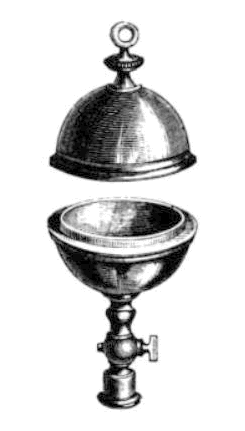
This week, we had two presenters on block day. We learned about atmospheric pressure. When pressure is below pressure, it is a vacuum, which basically means that there is no air. Gas and all fluids flow from high pressure to low pressure. 14.7 pounds per square inch is the atmospheric pressure on earth. Whenever we are in a higher elevation, there is less gas. One of the experiments they showed was with a balloon. Mr. Webb blew a small balloon. They took out the air around the balloon and the balloon expanded. I have seen the feather and the washer experiment before in eighth grade. I learned about the Magdeburg hemispheres. In my class, two boys were able to pull the hemispheres apart because they could overcome the force of the pressure. The can crush was different from the one we did in class. Mr. Webb's can was like a spiral. In another experiment, the water boiled with heat. As the water boiled longer, the water grew colder.

Friday, March 19, 2010

Week of 3/15/10


This week, we took a test on Monday. On Wednesday, we started a new unit on gases. So far, I think it is hard to understand. We learned about the general properties of gases. We did a lab on the pressure of gases. I thought the submarine diving was interesting. When we squeezed the bottle, the water level in the eyedropper rose. It was also cool how the can squashed, but I remember in eighth grade that my teacher showed us this experiment. I missed class on Thursday. I had a swim meet against Carlmont. The girls varsity tied. The girls JV lost. The varsity guys lost. The JV guys lost. I swam the 200 IM, 4x50 free relay, 100 breast, and 4 x 100 free relay. I added a second on my 200 IM. I totally died in my last 50 of the 200 IM, in the freestyle. We won the other Carlmont team in the 200 free relay by a touch. In the 100 breaststroke, I think I beat my time, but I am not sure because one of my times was 1:17.25 and the other was 1:17.03. I think I lost this race but a hand touch. I couldn't reach as far because my arms were short. In the 4 x 100 freee relay, my team won. It was an exciting meet because I thought girls varsity would lose, and we ended up with a tie.

Thursday, March 11, 2010

Week of 3/8/10


This week was a four day week because there was a staff recess on Friday. This week we learned about equilibrium. The Collision Theory states that atoms, ions, and molecules can form a chemical bond when they collide. The activation energy is the minimum energy colliding particles must have in order to react. The four factors that affect reaction rates are temperature, concentration, particle size, and catalyst. Whenever a catalyst is added, the activation energy is lowered. We learned about Le Chatelier's Principle. It basically states that equilibria resist change. Chemical equilibrium is dynamic and reversible. Changes in gas pressure and changes in temperature can affect which way the reaction will go.
This week we also did a lab. I was very interested in the drinking happy bird. I thought it was cool how the bird could drink water.

Friday, March 5, 2010

Week of 3/1/10


This week, we learned about calorimetry. At first, it seemed confusing, but when I did more practice, I got used to the problems. the teacher showed a video about Q equals mc delta T. It was funny. I learned about the phase change curve. We did a lab about melting ice. There were three phases: solid, liquid, and gas. In between these phases, there was melting and vaporization(boiling). the opposite of melting was freezing, and the opposite of vaporization was condensation. the fusion of water meant melting or freezing. I learned how to do calorie- joule conversions.

This week was the first high school season swim meet. It was away at Terra Nova. I did pretty well at this meet. However, I think I could have done better. It was very cold there. I did not want to get out of the pool. We returned home very late. I was tired.

Sunday, February 28, 2010

Week of 2/22/10


This week, we learned about heat transfer. There are three types of heat transfer: conduction, convection, and radiation. Conduction is when heat molecules vibrate to heat other molecules. In convection, heat rises, then cools down, then goes up again. Convection is a flow of matter. It occurs in our oceans, our atmosphere, adn Earth's mantle. Radiation is when the sun gives us heat in rays. There are endothermic reactions and exothermic reactions. In endothermic reactions, heat is absorbed, so heat is a reactant. In exothermic reactions, heat is released so heat is a product. We learned how to calculate heat energy. Q= mc (deltaT) Heat energy is measured in calories or Joules. M is the mass measured in grams. C is the specific heat of the substance (cal/g degrees C or J/g degrees C). Delta T is the change in temperature (degrees C) = T final minus T initial. the equation Q=mc (delta T) describes the heating or cooling of a specific physical object. Each variable must refer to that specific object.

Sunday, February 21, 2010

Week of 2/15/10


Last week, we had a test on reactions and stoichiometry. I understand reactions and I know how to do stoichiometry problems. I did not need to use my compostition book to take my test. We did a lab. We mixed 3M of hydrochloric acid and and 3g of sodium carbonate. We boiled this solution and salt was left in the beaker. We had a very small percent error. I think my balance was not a zero before I found the mass of the items. My group's balance was different from the other groups. There was some popping noise when the water was all boiled out and dry. Some white stuff came out of the beaker. I thought the popping noise was interesting.

Friday, February 12, 2010

Week of 2/7/10


In chemistry, we learned about stoichiometry. At first, it seemed complex. Later, I got used to conversion factors. I could solve prblems easily because I used the same format every time. I only used different numbers and substance. We did a lab about the oxidation of magnesium. For the pre-lab, we used stociometry to figure out how much magnesium we would need to use for th combustion. Our experimental error was about 5.56%. I thought that was pretty close. We formed Magnesium oxide from oxgyen and magnesium. While the magnesium burned, I thought it looked pretty cool because the metal was glowing a brigth orange color. The product was in the form of white powder. Next week, we have the stoichiometry test.